The slowest part sets the speed
A phone charges only as fast as the weakest part of the chain: the charger, the cable and the phone itself. A 100 W cable on a 20 W charger still charges at 20 W. It will not harm the phone, but it will not make a slow charger fast.
So the right question at the counter is not “Which is the fastest cable?” but “Which charger and phone will it be used with?”
Type-C to Type-C: 65 W and 100 W
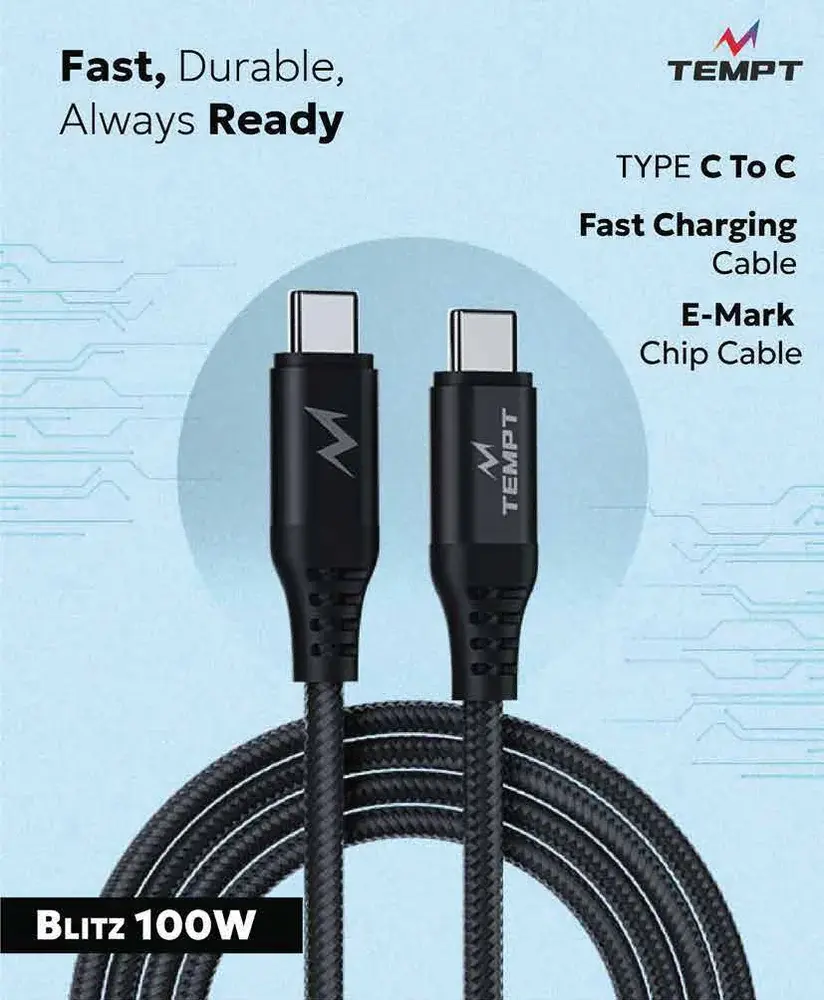
Most Type-C phones, tablets and many laptops charge over USB Power Delivery. A standard Type-C cable is rated for 3 A, which covers everyday phone charging and 60–65 W laptop chargers. Charging at 100 W needs a 5 A cable with an E-Mark chip, which tells the charger the cable can carry the extra current safely.
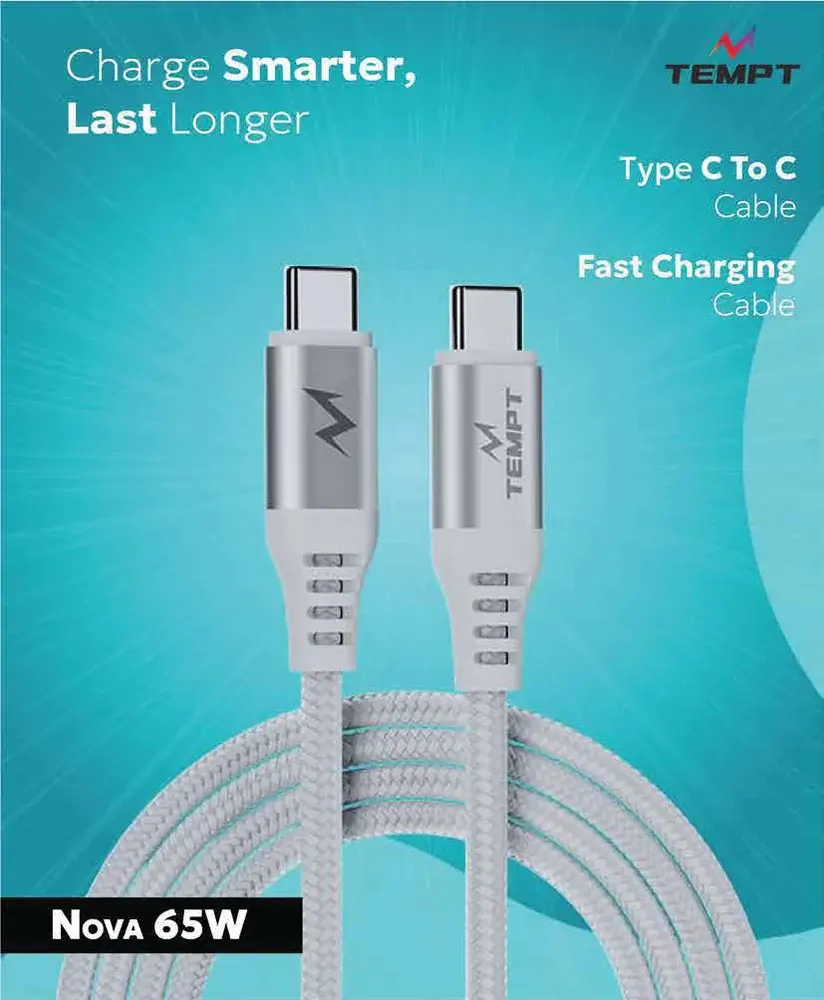
In the catalogue, Tempt Nova (65 W, Type-C to Type-C) is the everyday line for phones and 65 W chargers, and Tempt Blitz (100 W, Type-C to Type-C, with an E-Mark chip) suits 100 W laptop and tablet chargers.
USB-A to Type-C: the 120 W case
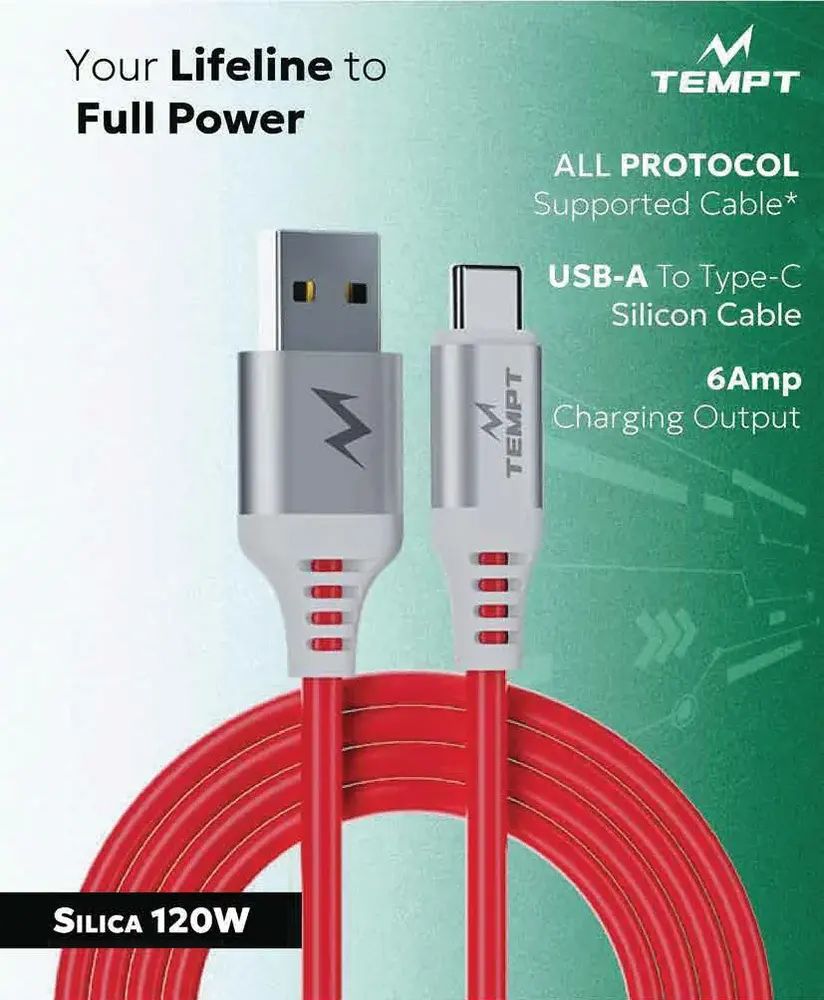
Many Xiaomi, Redmi, realme, iQOO and some OnePlus phones come with a USB-A charger that uses the brand's own high-watt charging. Those chargers reach full speed only with a thick, high-current cable, which is what a 120 W USB-A to Type-C cable is built for.
With any other charger it works as an ordinary cable at that charger's speed. Tempt Silica (120 W, USB-A to Type-C) is the line for these customers.
Sell the pair, not just the cable
Ask which charger the customer has. If it is a Type-C charger, match the cable to its wattage. If it is a USB-A brick, check the phone brand before offering a 120 W cable. When the phone supports faster charging than the customer's old brick, a charger upgrade is the more useful sale.